
Best Queen Mattress Under 500: Size, Support and Value Checks
Why Generic Rankings Don’t Tell the Full Story
Most online mattress rankings for “best queen mattress under 500” are driven by affiliate commissions, limited hands-on testing, or outdated data. They often highlight a handful of mainstream brands while overlooking newer or niche options that might be a better fit for your situation. Even when testing is thorough, a reviewer cannot know your bed frame height, your partner’s preferences, or the tight clearance in your bedroom. Rankings also tend to oversimplify by prioritizing comfort scores over long-term durability or real-world size variation. For a purchase that you’ll use every night, it’s safer to build your own evaluation checklist than to outsource the decision to a numbered list.
Queen Mattress Dimensions and Tolerance: What Actually Matters
The standard queen mattress size is 60 inches wide by 80 inches long, as defined by the International Sleep Products Association. However, in practice, most mass-produced mattresses under $500 can vary by up to ±1 inch in either direction due to manufacturing tolerance. That small difference may not sound like much, but it can cause problems with bed frames, headboards, or fitted sheets that are made to exact measurements. If you are comparing standard queen options for retail, wholesale, or private-label projects, you can also review our queen mattress product example to understand how mattress size, structure, and production details are presented on a product page. Always check the brand’s stated dimensions, not just the label, and measure the mattress yourself once it arrives. If you have a tight space or a custom bed frame, even a half-inch deviation can matter.
Bed Frame and Foundation Compatibility
A queen mattress will only fit a queen-sized bed frame or foundation. If you try to place a queen mattress on a full-size frame, you’ll have dangerous overhang on all sides. Likewise, a full mattress on a queen frame will leave unsupported gaps. For foam mattresses, the foundation type is critical. Memory foam and hybrid mattresses need a solid or closely slatted base — usually slats no more than 3 inches apart — to prevent sagging. Otherwise, the foam can push through the gaps and wear out prematurely. Traditional innerspring models usually work fine with a box spring. Before buying, confirm what kind of support system you have or plan to buy, and read the mattress warranty requirements about acceptable foundations.
Understanding Mattress Thickness and Room Fit
Mattress thickness, or profile, typically ranges from 8 inches to over 14 inches. Under $500, you’ll see many 8-10 inch foam beds and some 12-inch hybrid options. Thickness affects more than just comfort. A thicker mattress combined with a tall bed frame can make it difficult to get in and out of bed, especially for children or older adults. It also changes the visual proportion of the room and requires deep-pocket fitted sheets. Measure the height from your current bed frame slats to the top of your headboard, and think about how the mattress will sit. A high-profile mattress in a short bedframe can look awkward, while a thin mattress on a tall frame feels insubstantial. Consider your own mobility and the overall bedroom aesthetic, not just the comfort claims.
How Production Quality Affects Value Under $500
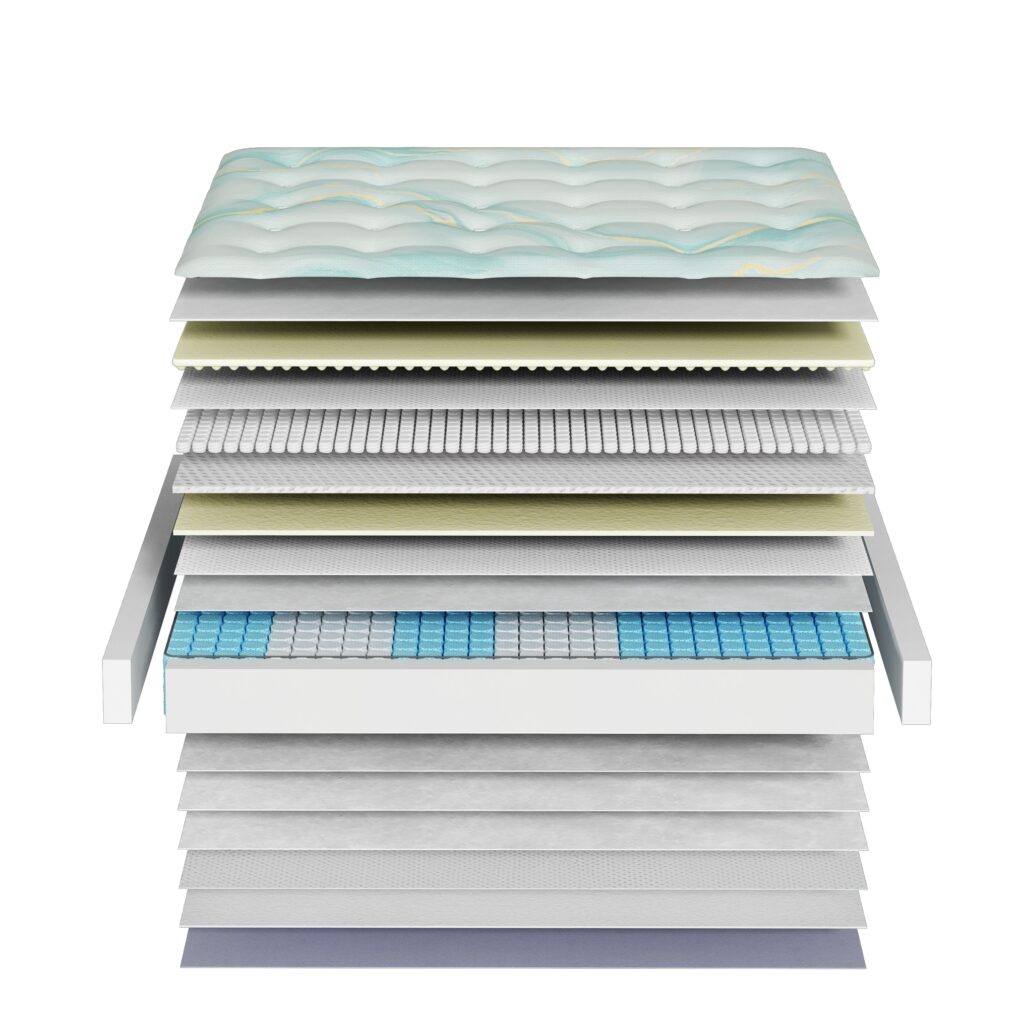
At this price point, quality varies dramatically. Instead of trusting brand marketing, look at objective indicators. For foam mattresses, check for CertiPUR-US certification, which verifies low VOC emissions and minimum durability standards. Foam density is a key metric: higher-density foams above 1.8 pounds per cubic foot for the support core tend to last longer. For innerspring or hybrid models, coil gauge and coil count matter. Thicker wire, which means lower gauge, and higher coil counts generally mean more durable support. Edge support is another often-overlooked factor — poor edge support can make the mattress feel smaller and can cause rolling off. Under $500, you may need to accept some trade-offs, but avoid mattresses that use low-density foam cores below 1.5 lb/ft³ or very thin coil wire, as they are likely to develop soft spots within a couple of years.
Custom Order Considerations vs. Off-the-Shelf Options
If you need a non-standard queen size, like a shorter “camper queen” for an RV or a slightly narrower queen for a tight bedroom, you may have to explore custom mattress makers. Custom orders under $500 are possible but more limited: you’ll likely be dealing with smaller foam fabricators who can cut and layer foam to your specs. For buyers who need special sizes, private-label structures, or project-based mattress supply, our custom mattress solutions section can help you compare how custom mattress requirements are usually organised. This route often gives you more control over materials and firmness, but you’ll need to understand foam density yourself and the mattress won’t come with a brand-name warranty. Lead times can also be longer. For standard sizes, off-the-shelf mattresses offer the convenience of quick shipping and trial periods. Before ordering custom, double-check whether a standard queen can still work with minor adjustments to your bed frame or room layout.
A Practical Evaluation Checklist for a Queen Mattress Under $500
Use this checklist when comparing options. It keeps you focused on details that generic rankings skip.
| Factor | What to Check | Why It Matters |
|---|---|---|
| Actual dimensions | Manufacturer’s stated width × length, plus any tolerance notes | Prevents fit problems with bed frame and sheets |
| Thickness profile | Full mattress height in inches | Affects bed height, sheet pocket depth, and ease of use |
| Required foundation | Slatted, solid, adjustable, or box spring? | Mismatched support voids warranty and shortens lifespan |
| Materials and certifications | CertiPUR-US, Oeko-Tex, foam density, coil gauge | Indicates safety and how long the mattress will hold up |
| Edge support | Reinforced perimeter or high-density foam edge | Prevents roll-off and makes sitting on the edge more stable |
| Return policy and trial | Length of trial, return-shipping responsibility | Protects you if the mattress doesn’t work out |
| Warranty coverage | Years covered, what’s excluded, sagging depth threshold | Sagging is a common failure; warranties often require visible indentation >1 inch |
Common Mistakes to Avoid When Shopping on a Budget
- Ignoring thickness: a 14-inch mattress on a tall wood frame can sit too high for comfort.
- Assuming all queens are the same: double-check width and length before buying, especially if your room is tight.
- Forgetting the foundation: putting a foam mattress on widely spaced slats will cause it to sink.
- Focusing only on firmness labels: firmness is subjective and varies between brands. Look at comfort layer materials instead.
- Overlooking your sleep position: side sleepers need more pressure relief, which often means thicker comfort layers — harder to find under $500 without sacrificing support.
- Skipping the return policy fine print: some budget mattresses require you to pay return shipping, which can be costly.
Final Takeaway: Making Your Own Informed Choice
Evaluating the best queen mattress under $500 doesn’t require trusting a sponsored ranking. It requires a clear understanding of your own bedroom setup and a practical checklist of critical factors: exact dimensions, thickness, foundation compatibility, material quality, edge support, and return terms. By focusing on these concrete details, you can separate the mattresses that offer real value from those that only market well. Take measurements, read the fine print, and remember that a comfortable mattress is one that fits your body, your room, and your long-term expectations — not just a budget number.
References
Related Guides in This Category
- Twin Mattress Under $100: Size, Support and Value Checks
- Best Budget Queen Mattress: Size, Support and Value Checks
- Best Twin Mattress for Adults: Size, Support and Value Checks
- Best Infant Crib Mattress: Size, Support and Value Checks