
Mini Crib Mattress: Firmness, Fit and Safety Checks
What Is a Standard Mini Crib Mattress Size?
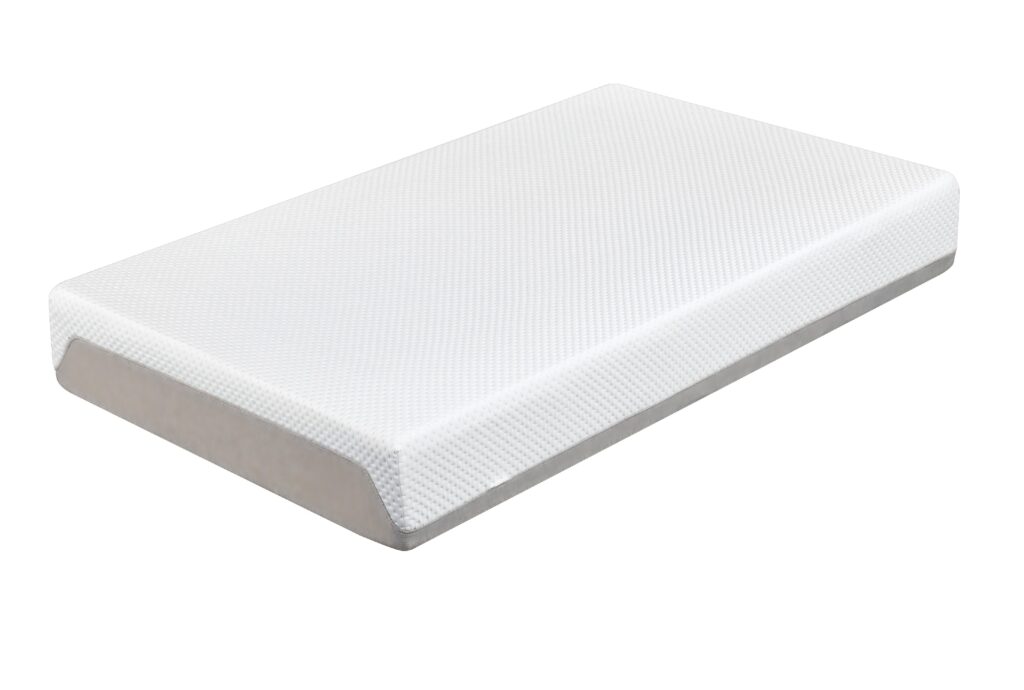
Most standard mini cribs are designed to take a mattress that is approximately 24 inches wide by 38 inches long. The U.S. Consumer Product Safety Commission (CPSC) requires that a crib mattress fit snugly inside the crib frame, with no more than two finger-widths of gap at any point when the mattress is centered. While full-size crib mattresses must be at least 27.25 inches by 51.25 inches, mini cribs have no universal legal minimum, so always rely on the crib manufacturer’s instructions.
- Typical mini crib interior: 24″ × 38″
- Expect a production tolerance of ± ½ inch in many commercially available mattresses
- Thickness is commonly between 3 and 5 inches; a firmer, thinner mattress is safer for infants
Always measure the inside of the crib frame at mattress level—not the top rail—before choosing a mattress. A bed that appears to be a standard mini crib may be a uniquely sized portable crib, foldable travel crib, or a non-standard vintage piece.
Mini Crib Mattress Fit: Why a Snug Fit Matters
A safe sleep surface depends on eliminating gaps. Even a 1-inch gap can let an infant slip into an unsafe position. Therefore, the fit of a mini crib mattress is not a matter of convenience; it’s a safety requirement.
When you place the mattress in the crib:
- Check all four sides with a simple two-finger test. If you can easily fit two stacked adult fingers between the mattress edge and the crib side, the gap is too large.
- Check after centering the mattress. Sometimes a mattress will shift during use; a snug fit means it stays in place.
- If the crib has curved ends or non-parallel sides, a rectangular mattress may not fit securely without customization.
Remember that a mini crib mattress sold as “standard” may still vary slightly between brands. Always verify the actual dimensions printed on the packaging or tag rather than relying on the product name alone.
Thickness and Firmness for Mini Crib Mattresses
Infant safety guidelines stress a firm sleep surface. The American Academy of Pediatrics recommends a firm mattress that does not indent when the baby is placed on it. For a mini crib mattress, this generally means:
- A thickness of no more than 5 inches. Thicker mattresses can be too soft, even if labeled “firm.”
- High-density foam or innerspring construction that resists compression.
- A tight-fitting, breathable sheet that does not bunch up.
Aftermarket toppers or soft pads should never be used. The mattress itself must be firm and bare except for a fitted sheet. If a mattress cover is needed for waterproofing, it must fit as tightly as the sheet without any loose material.
Production Tolerances and How They Affect Fit
Even when a mini crib mattress is labeled “24″ × 38″,” the actual manufactured size may be slightly smaller or larger due to normal production tolerances. A ± ½ inch variance is common and usually acceptable—provided the crib interior is also sized to allow for it. Trouble arises when the crib is at the smaller end of its own tolerance range and the mattress is at the larger end, or vice versa.
| Scenario | Result if Not Checked |
|---|---|
| Crib interior slightly smaller than spec | Standard mattress may be too tight, causing buckling or difficult sheet changes |
| Crib interior slightly larger than spec | Standard mattress leaves a dangerous gap |
| Mattress width or length varies by ±½” | Fit may be snug on one crib but loose on another of the same model |
| Non-parallel crib walls | Rectangular mattress leaves uneven gaps |
What can you do? Measure your crib’s interior precisely at multiple points. If the maximum and minimum measurements differ by more than ½ inch, a standard size may not work safely. In that case, a custom-built mattress can be ordered to the exact required dimensions.
When to Consider a Custom Mini Crib Mattress
A custom mini crib mattress makes sense when:
- You have an older or antique crib with non-standard interior measurements.
- You own a compact crib or travel crib that uses unique dimensions.
- The crib interior is not perfectly rectangular (e.g., slightly rounded corners or angled sides).
- You need a specific thickness to match a drop-side rail or storage drawer clearance.
- Standard mattresses consistently fail the two-finger test in your crib.
Custom does not mean complicated. Reputable manufacturers can produce a firm, safety-compliant foam or innerspring core to any reasonable shape and size. The key is to provide accurate measurements and a clear description of any non-standard features.
How to Measure and Order a Custom Mini Crib Mattress
Follow these steps to ensure a custom mattress fits correctly:
- Measure the inside width at the crib’s mattress support level in three places: near the head, center, and foot. Use the smallest measurement.
- Measure the inside length from the headboard to the footboard at the mattress level, again using the smallest distance.
- Check corner configuration: are they square, slightly rounded, or clipped? A template or precise sketch helps.
- Decide on thickness based on crib rail height and safety guidelines (3–5 inches is typical).
- Specify firmness: For an infant, request a high-density foam with ILD (Indentation Load Deflection) typical of firm crib mattresses.
- Ask about certification: Look for statements of compliance with CPSC crib mattress safety standards (16 CFR Part 1241) and flame-retardant requirements.
When ordering, keep a written record of the dimensions and the manufacturer’s tolerance statement. A good custom builder will advise if your requested size falls outside a safe fit range.
Common Mistakes When Choosing a Mini Crib Mattress
Many fit and safety problems can be avoided by sidestepping these errors:
- Assuming all “mini crib” mattresses are exactly 24″ × 38″.
- Measuring the crib exterior instead of the interior where the mattress rests.
- Using a mattress that is too thick, which reduces the effective crib side height.
- Relying on brand name alone without checking actual dimensions.
- Ignoring corner shape—some cribs have clipped corners that need a matching mattress cut.
Final Decision Checklist
Use this checklist before you buy or order a mini crib mattress:
| Checkpoint | Yes / No |
|---|---|
| Measured crib interior width and length at mattress level? | |
| Confirmed the mattress dimensions (including tolerance) match within a safe gap? | |
| Tested fit with two-finger rule on all sides? | |
| Verified thickness does not reduce effective rail height below 9 inches from mattress top to rail top? | |
| Checked firmness (no soft spots or plush layers)? | |
| If custom, provided precise interior shape and corner details? | |
| Ensured the mattress meets current CPSC and ASTM safety standards? |
A well-fitted mini crib mattress is a straightforward purchase when you focus on measurements, firmness, and safety standards. Custom ordering is a sensible backup when standard sizes fall short, keeping the sleep environment both comfortable and secure.