
Full Mattress and Box Spring Set: Frame Match, Support and Setup Notes
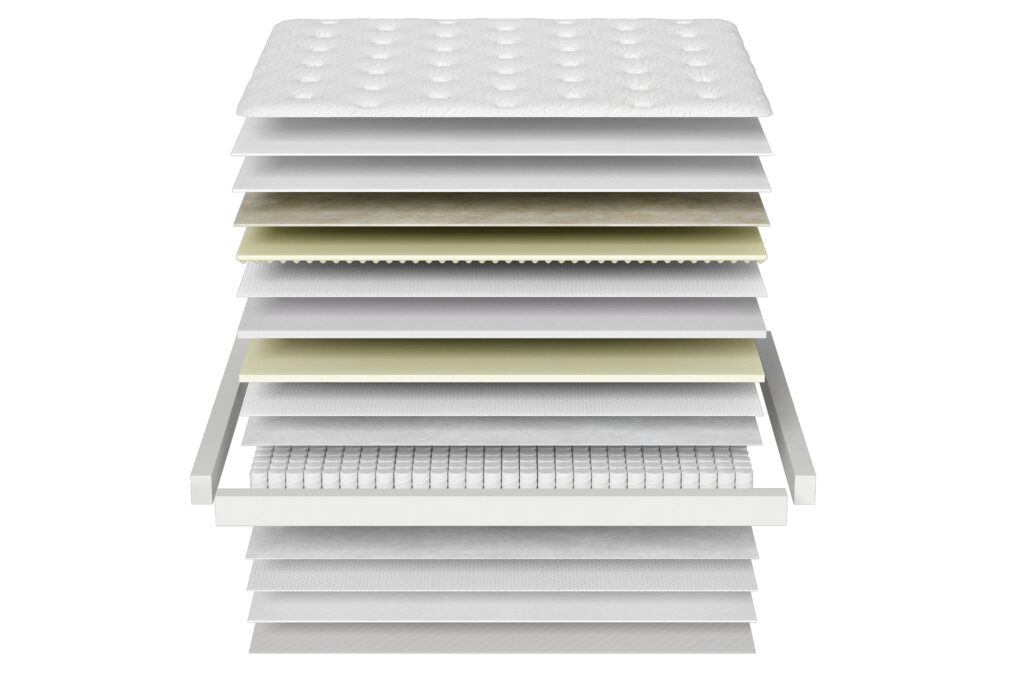
This guide walks through real-world dimensions, bed frame pairings, clearance needs, and custom-order considerations—without turning into a sales pitch. If you are planning to buy a full mattress and box spring set or specifying dimensions for a custom build, the following sections help you avoid the most common fit and compatibility mistakes.
What Is a Full Mattress and Box Spring Set?
A full mattress and box spring set pairs a full-size mattress (sometimes called a double) with a matching foundation designed to support the mattress and lift it to a usable height. The box spring is typically a wood or metal frame covered in fabric, containing springs or a rigid grid. Its main job is to absorb shock, reduce mattress wear, and raise the sleep surface. Some modern sets use a low-profile “box spring” or foundation that is simply a flat, rigid base with no actual springs.
Together, the mattress and box spring create a cohesive sleep system. They are sold as a set or individually, but when buying a set, the two components are matched in width and length. Understanding exactly what you are getting is the first step to a successful fit.
Standard Full Mattress and Box Spring Dimensions
The standard full mattress measures 54 inches wide by 75 inches long. The matching box spring shares the same width and length. However, several variations exist:
| Component | Width | Length | Common Thickness | Notes |
|---|---|---|---|---|
| Full Mattress (Standard) | 54 in | 75 in | 8–14 in | Most common; thicker mattresses are popular. |
| Full XL Mattress | 54 in | 80 in | 8–14 in | Adds 5 in of legroom; less common, requires special sheets. |
| Standard Box Spring (9 in) | 54 in | 75 in | 9 in | Traditional height; may feel tall with a thick mattress. |
| Low-Profile Box Spring (5 in) | 54 in | 75 in | 5 in | Ideal for modern thick mattresses or shorter users. |
| Split Box Spring | 27 in each | 75 in | 5–9 in | Two separate pieces for narrow stairways or tight corners. |
Always verify exact dimensions with the retailer or manufacturer, because nominal sizing can differ slightly from the actual product. A fraction of an inch may not matter in a large room, but it can ruin the fit inside a recessed bed frame or a tightly planned space.
Box Spring Thickness and Overall Bed Height
The combined height of a full mattress and box spring set directly affects how easy it is to get in and out of bed. A standard 9-inch box spring plus a 12-inch mattress on a basic metal frame (about 7 inches of clearance) yields a sleep surface around 28 inches high. That may be perfect for someone tall, but a challenge for a smaller adult or a child. A low‑profile 5-inch box spring can drop the overall height by 4 inches, making the bed feel more approachable.
Consider these practical examples:
- Tall antique bed frames often expect a thick box spring to bring the mattress up to the side rails.
- Platform beds typically skip the box spring entirely, using slats or a solid base; adding a box spring would make the mattress sit too high and look awkward.
- Adjustable bases replace the box spring; adding a traditional box spring is usually impossible and may void the warranty.
Before ordering a full mattress and box spring set, measure the height of your existing bed frame rails or headboard and decide whether you want a standard or low‑profile foundation. If you have a particular bed frame in mind, check its design to see if a box spring is required at all.
Bed Frame Compatibility for a Full Mattress and Box Spring Set
Not every bed frame is designed to accept a box spring. Choosing the wrong frame can result in an unstable setup, a mattress that slides, or excessive wear. The table below summarizes the most common scenarios.
| Bed Frame Type | Requires Box Spring? | What You Need to Know |
|---|---|---|
| Metal frame with side rails and center support | Usually yes | Standard design relies on a box spring for mattress support; without it, the mattress may sag. |
| Wooden bed with slats | Sometimes | Many modern slatted beds are designed for a mattress only; check slat spacing—gaps wider than 3 inches may require a bunkie board or thin foundation. |
| Platform bed (solid or slatted) | No | Platform beds provide a built‑in foundation; adding a box spring would raise the sleep surface too high and may be unstable. |
| Bunkie board setup | No, but often used with a thin support board | A bunkie board is a 2‑inch flat support placed between slats and mattress; it is not a box spring but can replace one in some setups. |
| Adjustable base | No | Adjustable bases provide motorized support; box springs are incompatible because they cannot flex. |
If you already own a bed frame, measure the inside width and length. A full mattress and box spring set needs a frame with an internal span of approximately 54.5 to 55 inches wide by 75.5 to 76 inches long to allow for easy placement without forcing. Too tight a fit can damage the fabric of the box spring and make linen changes a chore.
Room Size and Clearance Considerations
A full mattress and box spring set occupies a footprint of about 54 by 75 inches, but the space needed to use it comfortably is larger. Allow at least 22–30 inches of walkway on one side of the bed, and 18–24 inches on the other side if the bed is against a wall. At the foot, leave 30–36 inches to walk around and open doors or drawers without obstruction.
A commonly cited minimum room size for a full bed is 10 feet by 10 feet. This leaves enough room for the bed, two small nightstands, and a dresser. In a smaller room—say 9 by 9 feet—the bed may still fit, but movement will be cramped.
- Side clearance: at least 22 inches for a primary walking path; 18 inches for a secondary side.
- Foot clearance: 30–36 inches.
- Door swing: Make sure the door can open fully without hitting the bed or box spring.
- Furniture layout: Plan where dressers, nightstands, and other pieces will go before setting up the bed.
- Ceiling height: If you use a canopy or tall headboard, the additional height of a box spring may bring the mattress closer to ceiling fixtures.
Measure your room and tape out the footprint on the floor. Living with the taped outline for a day can give you a feel for actual clearance before you commit.
Production Tolerances: Why Sizes May Vary Slightly
A “54 by 75 inch” full mattress and box spring set rarely measures exactly 54.0 by 75.0 inches. Mattress construction involves foam, fiber, and fabric layers that are cut and assembled with a tolerance of roughly ±0.5 to ±1 inch. Box springs, built on wooden or metal frames, may also vary. In a large room, a half‑inch discrepancy is unnoticeable; in a tightly fitted bed frame or RV cut‑out, it can mean the difference between a snug fit and a mattress that won’t drop in.
When ordering a full mattress and box spring set, ask the supplier about dimensional tolerances. If exact measurements are critical, some custom manufacturers can build to tighter tolerances. Otherwise, plan for the largest possible dimension within the tolerance range—if a mattress could be up to 55 inches wide, make sure your frame accommodates that.
Custom Full Mattress and Box Spring Sets: When Standard Sizes Aren’t Enough
Standard full mattresses work for most homes, but certain situations demand a custom size. Antique bed frames, RVs, boats, or built‑in platform alcoves often have nonstandard dimensions. A custom full mattress and box spring set can be made to any width, length, or corner shape—including cutouts for bed posts or rounded ends.
Custom orders typically involve:
- Nonstandard widths: 48, 50, or 56 inches, for example.
- Nonstandard lengths: 78 or 80 inches (full XL) are the most common, but shorter lengths like 72 inches exist for compact spaces.
- Special shapes: radius corners, notch cutouts, or split configurations for difficult access.
- Custom heights: A box spring can be built to a specific thickness to match a unique bed frame.
Bear in mind that custom builds require longer lead times and may not be returnable since they are made to order. Communication with the manufacturer is key: provide exact finished dimensions and double‑check how the set will be delivered through doorways and up staircases. Split box springs are often necessary for narrow halls or spiral stairs.
Tips for Ordering a Full Mattress and Box Spring Set
Use this checklist before you finalize your full mattress and box spring set order. It helps catch the most common oversights that lead to returns or exchanges.
- Measure your bed frame: inside width, inside length, and the height of the side rails above the floor. Verify whether the frame requires a box spring or can support a mattress directly.
- Measure your room and doorways: ensure the largest piece (usually the box spring) can navigate hallways, corners, and stairs. A split box spring can solve tight access problems.
- Decide on box spring profile: choose between standard (around 9 inches) and low‑profile (around 5 inches) based on desired overall bed height and frame design.
- Check slat spacing if you have a slatted bed. Gaps wider than 3 inches can void some mattress warranties; a bunkie board or solid platform may be needed instead of a box spring.
- Confirm tolerances: ask the retailer or manufacturer about expected dimensional variance. If you have a recessed frame, allow at least 0.5–1 inch of clearance on all sides.
- Review return and warranty policies: some sets may not be returnable if the box spring is opened; custom orders almost never are. Know the policy before you buy.
- Consider the full setup: mattress, box spring, frame, and any required hardware (like a center support bar) should be accounted for in your plan.
Final Takeaway
A full mattress and box spring set is a straightforward purchase on the surface, but getting the right fit requires attention to standard dimensions, box spring thickness, bed frame type, room clearance, and manufacturing tolerances. When standard sizes won’t work, custom builds exist—but they demand precise specifications and patience. By measuring carefully and understanding how each component interacts, you can avoid the hassle of returns and end up with a bed that fits your space exactly as planned.
References
Related Guides in This Category
- Twin Mattress and Box Spring: Frame Match, Support and Setup Notes
- King Mattress and Box Spring: Frame Match, Support and Setup Notes
- Queen Mattress Box Spring: Frame Match, Support and Setup Notes
- Queen Sized Mattress and Box Spring: Frame Match, Support and Setup Notes