
King Mattress: Fit Tolerances, Support and Setup Notes
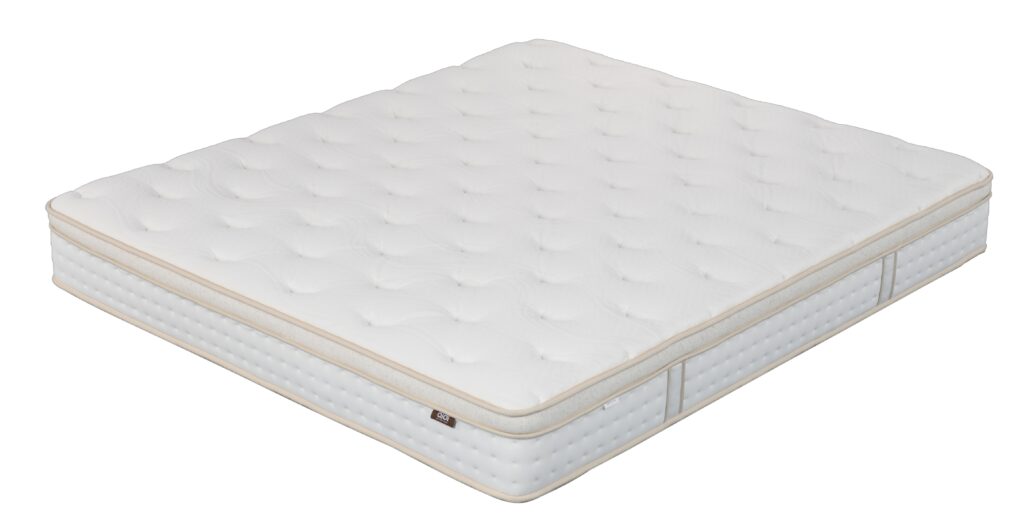
Standard King Mattress Dimensions
A standard king mattress, often called an Eastern king, measures 76 inches wide by 80 inches long (193 cm × 203 cm). This is the most common king size sold in the United States and is designed for two‑person use with generous width per sleeper.
Because of its width, a standard king is usually the best choice for couples who value side‑to‑side space. The 76‑inch width gives each person about 38 inches, close to the width of a twin‑size mattress.
- Width: 76 inches
- Length: 80 inches
- Surface area: 6,080 square inches
If your room is square or wide, a standard king often fits better. Standard king bedding and frames are widely available, making it an easy size to furnish.
King vs. California King: What’s the Difference?
Many shoppers confuse the standard king with the California king. While both are called “king,” they have different dimensions and suit different needs.
| Feature | Standard King (Eastern King) | California King |
|---|---|---|
| Width | 76 inches | 72 inches |
| Length | 80 inches | 84 inches |
| Total area | 6,080 sq in | 6,048 sq in |
| Best for | Wider rooms, couples wanting maximum width | Tall individuals, narrower rooms needing extra length |
| Sheet availability | Very common | Common but slightly less selection |
A standard king is wider but shorter; a California king is narrower but longer. If someone over 6 feet 2 inches tall needs extra legroom, the California king’s 84‑inch length helps avoid feet hanging off the end. For a couple where both people want equal width, the standard king is usually better. Also, check your room shape: a California king can make a narrow room feel longer, while a standard king fits better in a square or wide layout.
How Thick Should a King Mattress Be?
Mattress thickness ranges from as little as 5 inches for a basic foam mattress to 16 inches or more for plush pillow‑top models. The “right” thickness depends on comfort preference, bed height, and what sheet depth you have.
- 8–10 inches: Typical for firm, no‑frills mattresses. Works with standard sheets but may feel low.
- 10–13 inches: Most common for hybrid and memory‑foam mattresses. Balances comfort and bed height.
- 14–16+ inches: Luxury pillow‑top or thick layered foam builds. Needs deep‑pocket sheets and may require a step stool for shorter users.
Consider the total bed height: mattress thickness plus foundation or frame. A typical bed frame plus foundation adds 8–12 inches. If your mattress is 14 inches, the top of the mattress may sit 22–26 inches off the floor. Test whether you can sit comfortably and get in and out easily.
For custom orders, thickness is one of the easiest variables to adjust. Many mattress builders offer a choice of comfort layers that change overall height.
Room Size and Layout for a King Bed
A king mattress needs more than just the actual bed footprint. You need walking space, room for nightstands, and clear access to closets or doors.
A good rule of thumb: allow at least 2 feet of clearance at the foot and on the sides if the bed is against a wall, and 3 feet on the side where you enter. Ideally, an open floor path of 36 inches is comfortable.
Minimum room sizes:
- Standard king: 12 feet by 12 feet (144 sq ft) gives decent clearance. 13×13 or larger is ideal.
- California king: 12 feet by 14 feet works better because of the added length.
Measure your room, then mark out the mattress footprint with painter’s tape to see how it fills the space. Check door swings, closet doors, and window access before deciding on placement.
King Mattress Bed Frame Compatibility
A king mattress requires a frame that supports both weight and the exact footprint. Not all frames fit all king sizes.
Key frame types:
- Standard metal frame with slats: Works for most standard king mattresses; check center support bar and leg count.
- Platform bed: Often slatted or solid. Must match king dimensions exactly; gaps between slats should be under 3 inches for foam mattresses.
- Adjustable base: Must be split‑king compatible if you want independent head/foot adjustments for each side (see split king section).
- Rails and footboard/headboard set: Usually designed for a standard king footprint with brackets to secure the mattress.
Before buying a frame, ask:
- Does it have a center rail with a support leg that touches the floor? (Needed for king sizes.)
- Will the frame work with the mattress thickness you want? Some low‑profile frames make a thick mattress tower too high.
- For adjustable bases, does the frame accommodate two Twin XL bases side‑by‑side for a split king setup?
Production Tolerances: What Factory Measurements Mean
When you see “76×80,” that is the nominal size. In manufacturing, mattresses are almost never exactly that number. A typical production tolerance is ±1 inch in both width and length. This means a standard king could be as small as 75×79 or as large as 77×81 when unpacked and fully expanded.
For most home setups, a ±1 inch tolerance is acceptable because sheets and frames can accommodate small differences. However, if you are building a tight‑fitting bed frame, an alcove, or a custom RV or boat berth, even 1 inch matters.
Custom mattress makers often offer a tighter tolerance, sometimes ±½ inch or even ±¼ inch, especially for specialized applications. Always ask what tolerance the manufacturer guarantees before ordering.
Also, note that some materials, like memory foam, can shrink or expand slightly with temperature. Allow a small margin in your frame build.
Custom King Mattress Decisions
Custom king mattresses are built to order, usually when a standard size does not work. Reasons to order custom include:
- Non‑standard bedroom dimensions or built‑in platforms that need an exact size.
- RV, boat, or tiny‑home spaces where every inch counts.
- Antique or heirloom bed frames that are not a modern standard.
- Personal comfort preferences: specific firmness layers, natural materials, or dual‑comfort zones.
When ordering custom, be ready to provide:
- Exact width, length, and thickness, measured to the nearest ¼ inch.
- Your preferred firmness level and material build (innerspring, latex, foam, hybrid).
- Whether you need a split design for an adjustable base.
- Any covering or fire‑barrier requirements (especially for RVs or boats).
Lead times for custom mattresses are longer than off‑the‑shelf, often 2–6 weeks. Also, custom mattresses are typically final sale, so double‑check all measurements before ordering.
Split King Mattress Considerations
A split king is simply two Twin XL mattresses placed side‑by‑side on a king‑sized frame. Each mattress measures 38 inches wide by 80 inches long, together giving the same footprint as a standard king.
Why choose split king?
- Each partner can have their own firmness and mattress type.
- Works with an adjustable base that has two independent sides.
- Easier to move through narrow hallways and stairs—two Twin XL boxes are easier to handle than one large king.
Potential downsides:
- A visible gap between the two mattresses. Some people use a bridge connector or a mattress topper to hide it.
- Sheets and bedding may slip if not designed for split king (look for split‑king fitted sheets or separate Twin XL fitted sheets).
If you are considering an adjustable base, a split king is the most practical choice. Just make sure your bed frame and any footboard can accommodate two separate mattresses.
Common Mistakes When Buying a King Mattress
Many buyers focus only on the mattress surface and overlook fit logistics. Avoid these pitfalls:
- Skipping doorway and stair measurements: A king mattress rigid packaging can be over 75 inches wide. Measure hallways, turns, and door openings before delivery day.
- Ignoring the foundation: A box spring or platform that is too thick or too weak for the mattress weight will ruin support.
- Forgetting about ceiling height: A thick mattress on a tall bed frame can make the bed sit 30+ inches high. Test sitting height if you have low ceilings or are shorter.
- Choosing by price alone: A cheap king mattress may lack edge support or durability for two people.
- Not verifying return policies for custom sizes: Most custom mattresses are non‑returnable. Confirm before ordering.
- Assuming all California king frames fit standard king: They don’t—the 4‑inch width difference matters, especially with a wooden frame or built‑in platform.
Final Takeaways
A king mattress offers exceptional personal space, but it demands careful planning. Start with exact dimensions: standard king is 76×80 inches; California king is 72×84 inches. Decide based on room shape and sleeper height. Allow enough clearance for walking and furniture. Check bed frame specs, production tolerances, and thickness so everything fits together.
Custom builds open up nearly unlimited possibilities for odd‑sized bedrooms, RVs, and specific comfort preferences, but they require precise measurements and patience with lead times. Split king setups are ideal for adjustable bases and couples with different sleep needs.
By measuring doorways, verifying frame compatibility, and understanding tolerances, you can avoid the most common king mattress buying mistakes and enjoy a bed that fits your space and sleep style.
References
Related Guides in This Category
- Small Single Mattress: Fit Tolerances, Support and Setup Notes
- Full Mattress Set: Fit Tolerances, Support and Setup Notes
- Standard Twin Mattress Size: Fit Tolerances, Support and Setup Notes
- Twin XL Mattress Measurements: Fit Tolerances, Support and Setup Notes